
Safety Risks Homeowners Ignore With Aging Garage Doors
Updated: Aug 29
Many garage doors in Orange County have been operating for 15, 20, or even 30 years. While these systems may still appear functional, age-related wear can affect critical safety components such as springs, cables, rollers, tracks, and automatic reversing systems. What begins as a minor maintenance issue can gradually develop into a larger safety concern if routine inspections and repairs are postponed.
At OC Garage Door Guys, we regularly inspect and repair older garage door systems throughout Orange County, helping homeowners recognize early warning signs before they lead to unexpected breakdowns or costly repairs.
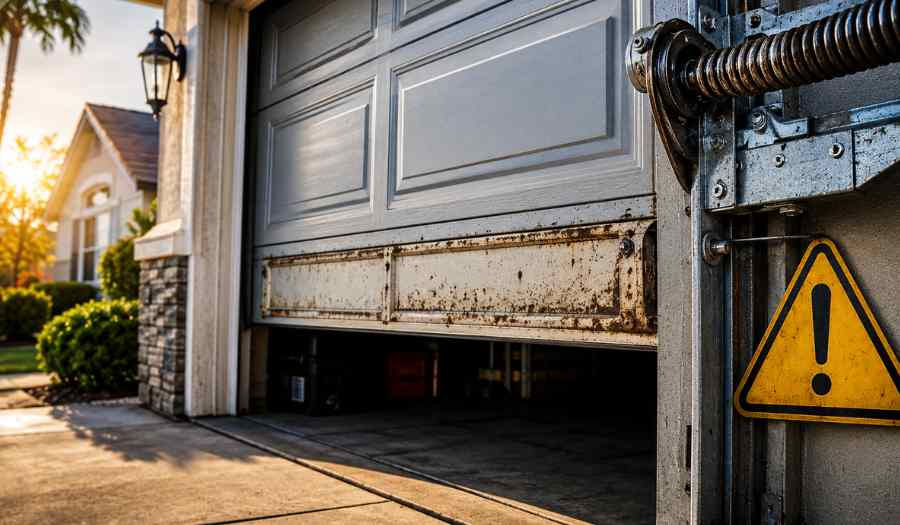
Highlights – Key Safety Concerns:
Broken or Worn Springs: Old torsion or extension springs can suddenly snap, causing the heavy door to crash to the floor. Always replace aging springs in pairs to keep the door balanced.
Frayed Cables: Cables connected to the springs can fray with age. If a cable snaps under tension, it can whip loose and cause injury. Have worn cables replaced by professionals.
Faulty Auto-Reverse Mechanism: Federal law requires all openers sold after 1991 to reverse on contact. Homeowners should monthly test this by placing a 2×4 board in the door’s path. If the door does not reverse, immediately stop using it and schedule a repair.
Misaligned Photo-Eye Sensors: Modern doors have photoelectric "eye" sensors at the floor level. If dirt, misalignment, or age has disabled these sensors, the door may not stop for a child or object in its path. Clean and align sensors regularly (see steps below).
Imbalanced Door: A well-adjusted door should stay put wen opened halfway. An unbalanced door may slam shut unexpectedly. This is a major hazard if a person or pet is beneath it.
Loose Hardware and Tracks: Bolts, rollers, and tracks can loosen or warp over time. A door off its track or with loose rollers can behave unpredictably. Tighten hardware and replace worn rollers to avoid sudden malfunctions.
Safety Cables: Extension-spring systems require safety cables through the springs. Without them, a broken spring can become a dangerous projectile. Make sure safety cables are installed or add them during maintenance.
Children’s Safety: Keep wall push buttons high and store remotes out of children’s reach. Teach kids never to play with the door controls or stand under a moving door.
Aging Garage Door Issue | Potential Safety Risk | Recommended Action |
Worn Springs | Door may fall unexpectedly | Replace springs professionally |
Frayed Cables | Cable snap and injury risk | Schedule immediate replacement |
Faulty Auto-Reverse System | Entrapment hazard | Test monthly and repair if needed |
Misaligned Sensors | Door may not detect people or objects | Clean and realign sensors |
Loose Hardware | Unpredictable door movement | Tighten or replace components |
Imbalanced Door | Sudden door closure | Have the balance checked by a technician |
Lack of Lubrication | Excess wear on moving parts | Lubricate rollers, hinges, and bearings |
Aging Garage Door Opener | Missing modern safety features | Consider upgrading the opener |
Which Orange County Homeowners Face the Highest Garage Door Safety Risks?
This article provides information applicable to all homeowners/renters who own a garage, especially in Orange County’s diverse weather conditions. All persons who have an exterior garage door, from Santa Ana to Laguna Beach, are subject to the same aging-door dangers. Many Orange County homes have garage doors that are more than 10 years old, show visible signs of corrosion, or have never received routine professional maintenance. In addition, if there are any children in the household, extra caution should be taken because approximately 75% of garage door accidents happen to children who are less than 15 years old.
Additionally, all businesses that have their own garage doors for storage or for business, should keep these garage door safety tips in mind, to help reduce risk for their employees and customers. OC Garage Door Guys continually tells customers in cities such as Anaheim and Mission Viejo, that garage doors, even though they appear to function properly can be hiding failures that may not be visible to the untrained eye.
Who Is Most at Risk From an Aging Garage Door?
Homes with garage doors older than 15 years
Families with children or pets
Properties with infrequently serviced garage doors
Homes with original springs and cables
Rental properties with high garage door usage
Homes where the garage serves as the primary entrance
How to Stay Safe: Inspection and Maintenance Steps
Follow these step-by-step checks to catch safety issues before they cause accidents. Perform this maintenance at least a couple of times per year, or monthly tests for the safety mechanisms:
Visual Inspection: Take a close inspection of all parts of the door - including hinges, springs, cables, brackets & rollers - for any signs of wear, rust or damage. Any loose bolts or nuts on the tracks and hardware should be tightened. If you're able to identify damaged (frayed cable) and very worn components, refrain from using the door until you have had a professional assess the condition of your system.
Balance Test: Manually unhook your garage door motor (using your quick-release cord) and lift the door up about 3-4 feet. The door will hold itself in this position. If you must struggle to lift it or it falls to the ground after release, the springs are unbalanced and the garage door is potentially harmful to your safety. An unbalanced garage door could come crashing down unexpectedly. Contact a qualified technician to make the necessary adjustments or replace the springs.
Reverse-Mechanism Test: Place a 2×4 board (or other sturdy object about 2 inches thick) on the floor under the centre of the door. Press the remote or wall button to close the door. It should automatically reverse upward when it hits the board. If it does not, the opener’s auto-reverse feature has failed. Stop using the door until a technician adjusts, repairs, or replaces the opener. Federal guidelines require all systems made after 1991 to have this reverse feature.
Sensor Check: Find the photo eye sensors at either side of the door, which are usually 4-6 inches from the ground. To ensure that the lenses are clean, dust and dirt can block their view of one another. With a clear path of lens to lens, test the sensor function by waving an object in front of the sensor to determine if the door will automatically reverse upon hitting an obstruction. If the door does not reverse due to any obstruction, please check the electrical connections to the door and sensors.
Test the Auto-Reverse Sensitivity: To test the sensitivity level on your opener, simply close it on a soft object (such as a bag of sand) without blocking the photo eye’s beam. The door should reverse on light contact with the object, otherwise, you will need to adjust the force setting. If your opener is older than approximately 20 years, there may not be any safety features installed and you will want to change it out.
Lubrication: To decrease friction and wear, apply a silicone-based garage door lube to all rollers, hinges, bearings, and the spring assembly of the garage door. Avoid using grease to prevent dirt from sticking to it. Proper lubrication of a garage door allows it to open and close silently and smoothly. Do not attempt to lubricate the spring itself; the spring must be replaced periodically and does not require lubrication, only oiling.
Keep Controls Out of Reach: Wall-mounted pushbuttons should be elevated at a minimum of 5 feet. Store all remote controls within your vehicle and away from children. Every year, children are injured by garage doors after playing with or tampering with controls. No one should walk or play beneath a moving door.
Schedule Professional Inspection: No matter how great everything appears to be, hire a professional only after having a trained technician (such as a member of the OC Garage Door Guys) inspect your garage door each year. A trained garage door professional will thoroughly inspect your garage door components, including springs, sensors, openers, and safety features. These components are not always checked completely through do-it-yourself checks.
Garage Door Safety Inspection Checklist
☐ Door stays balanced halfway open
☐ Auto-reverse system works properly
☐ Safety sensors are aligned
☐ Springs show no visible rust or damage
☐ Cables are not frayed
☐ Rollers move smoothly
☐ Tracks are secure and unobstructed
☐ Opener responds consistently
Warning Signs That Require Immediate Garage Door Repair
Should any of these tests indicate a problem, such as an inoperable reverse on the door, springs or cables that have been visibly damaged, or sagging panels, you should immediately cease using the door and contact a professional for assistance. Springs, cables, and operators should never be repaired by yourself; in fact, the common understanding in the garage door repair industry states that the springs are "the most critical and dangerous component" of the door system. High tension components should always be serviced only by qualified technicians due to the risk posed to you and your family. OC Garage Door Guys will provide same-day service to repair any aging garage door related issues throughout Orange County.
Most Common Garage Door Accidents Homeowners Experience
Doors closing unexpectedly
Broken spring injuries
Pinched fingers
Entrapment incidents
Falling garage doors
Remote-control misuse by children
Real-Life Example: Why Heavy Doors and Failing Cables Should Never Be Ignored
The risks associated with aging doors, worn cables, and heavy moving systems are not just theoretical. In 2025, People Magazine reported on a tragic accident in Florida in which a 71-year-old woman was fatally injured after a cable snapped while a large door was being lowered. According to authorities, the sudden cable failure caused the heavy door to fall without warning, resulting in catastrophic injuries. While this incident involved a trailer door rather than a residential garage door, it highlights an important safety lesson: any heavy door system that relies on cables, springs, or lifting mechanisms can become dangerous when critical components wear out or fail unexpectedly.
This is one reason garage door professionals recommend routine inspections of springs, cables, rollers, and safety systems,especially on older garage doors that may have years of accumulated wear.
Why Garage Door Safety Should Never Be Ignored
Garage doors that have aged have their own unique risks associated with them that could be there unless they are checked out on a regular basis. Proactive measures such as checking the automatic reversing function, checking the springs and cables for proper operation; and keeping the receivers clear of debris will help you prevent tragedy from occurring when someone gets crushed or trapped by an aging garage door.
OC Garage Door Guys out of Orange County strongly encourages homeowners to look at their garage door as a major appliance in their home, with the potential to cause injury to a family member if not maintained or serviced in a timely manner. If you have any uncertainty about your garage door, please contact a professional.
Performing regular scheduled maintenance on your garage door and any repairs that may be required will help keep your garage door operating safely, protect your family, and lengthen the life of your garage door system.
Real-World Example: How a Small Garage Door Issue Became a Major Safety Concern
A homeowner in Orange County contacted OC Garage Door Guys after noticing that their garage door had started making unusual grinding noises and occasionally hesitated while closing. Because the door was still opening and closing, the homeowner initially assumed the issue was minor and continued using the system for several months.
During the inspection, our technicians discovered multiple safety concerns, including severely worn rollers, a frayed lift cable, and a garage door spring that had lost a significant portion of its tension. The door had also become slightly unbalanced, placing additional strain on the opener and increasing the risk of a sudden mechanical failure.
Fortunately, the issues were identified before a complete breakdown occurred. After replacing the damaged components, balancing the door, and performing a full safety inspection, the system returned to smooth and reliable operation.
This situation highlights a common problem we see throughout Orange County: many homeowners assume a garage door is safe simply because it still works. In reality, aging components often show warning signs long before a serious failure occurs, making regular inspections one of the most effective ways to reduce safety risks and avoid costly repairs.
Expert Insight From OC Garage Door Guys
One of the most common misconceptions we encounter is that a garage door is safe as long as it still opens and closes. In reality, many of the most serious garage door failures begin months before a complete breakdown occurs. Worn springs, damaged cables, and failing safety systems often continue operating until a critical failure takes place. Regular inspections help identify these hidden risks before they become dangerous.
FAQ: Safety Risks Homeowners Ignore With Aging Garage Doors
Can an old garage door suddenly fall without warning?
Yes. Aging springs, worn cables, damaged tracks, or failing hardware can eventually cause a garage door to lose support and become unstable. In many cases, homeowners notice warning signs before a major failure occurs.
What is the most dangerous part of an aging garage door?
Garage door springs are often considered the highest-risk component because they operate under extreme tension. When springs fail, they can cause the door to become unexpectedly heavy or difficult to control.
Are older garage doors more likely to cause injuries?
Generally, older garage door systems are more likely to experience mechanical failures, worn safety features, and outdated components that can increase the risk of accidents if not properly maintained.
Can a garage door become unsafe even if it still works?
Yes. Many garage doors continue operating despite worn springs, damaged rollers, loose hardware, or failing safety systems. Functionality does not always mean the system is operating safely.
How do I know if my garage door is becoming a safety hazard?
Common warning signs include unusual noises, uneven movement, slow operation, sagging sections, frayed cables, rusted springs, or a door that feels heavier than normal.
What happens if a garage door spring breaks?
A broken spring can prevent the door from opening properly and may place excessive strain on the opener. In some cases, the door can become extremely heavy and difficult to lift safely.
Are garage door cables dangerous when damaged?
Yes. Frayed or worn cables can fail unexpectedly and affect the balance and stability of the door. Damaged cables should be inspected and replaced by a qualified technician.
Can an aging garage door opener create safety risks?
Yes. Older openers may have worn components, outdated safety technology, or reversing systems that do not perform as effectively as modern equipment.
How important are garage door safety sensors?
Safety sensors play a critical role in helping prevent the door from closing when an obstruction is detected. Faulty or misaligned sensors should be repaired as soon as possible.
Should I replace an old garage door or continue repairing it?
The answer depends on the condition of the system. When multiple major components are worn or outdated, replacement may provide a safer and more reliable long-term solution.
Can worn rollers and hinges become a safety issue?
Yes. Excessively worn rollers or hinges can affect door alignment, create additional stress on other components, and increase the likelihood of mechanical failures.
Is it safe to use a noisy garage door?
Not always. Grinding, popping, scraping, or excessive vibration can indicate underlying mechanical problems that should be inspected before they worsen.
Are children at greater risk around older garage doors?
Yes. Children may not recognize potential hazards, and older systems with worn or malfunctioning safety features can increase the risk of injury.
How often should an older garage door be professionally inspected?
Most experts recommend annual inspections, while older systems or heavily used doors may benefit from more frequent evaluations.
Can regular maintenance reduce garage door safety risks?
Absolutely. Routine inspections, lubrication, adjustments, and timely repairs help identify worn components early and reduce the likelihood of unexpected failures.
Why Orange County Homeowners Trust OC Garage Door Guys
When garage door safety is involved, choosing the right company matters. Homeowners throughout Orange County trust OC Garage Door Guys because of our focus on safety, long-term reliability, and professional workmanship. Our technicians inspect the entire garage door system-not just the obvious problem-to help identify hidden issues that could lead to future failures or safety risks.
Whether you're dealing with aging springs, worn cables, malfunctioning safety sensors, damaged rollers, or an outdated garage door opener, our team provides practical solutions designed to improve both safety and performance. We work with homeowners throughout Orange County to help keep garage door systems operating smoothly, reliably, and safely for years to come.
By combining professional inspections, quality repairs, and preventative maintenance recommendations, OC Garage Door Guys has become a trusted resource for homeowners looking to protect their families, their property, and their investment in their garage door system.